


The Ultimate Boot Guide.
For Guys Over 30.
What I’d tell a friend about buying, picking, and styling boots.
This post may contain affiliate links, read about our editorial promise
Thanks to Thursday Boot Co. for supporting Primer's mission and partnering on this piece.
Change your shoes and you change the outfit. Change them to boots and you change how people see the guy wearing it. That's the idea behind this guide, and it's why I wrote it for guys over 30, a label I use loosely. Think of it as the stretch of life when you've settled into knowing what you wear. You have a personal style by now, and boots are one of the biggest levers you can pull to shift it, add to it, or define it. Some of you already own six pairs. Some of you have never worn anything but sneakers. Both of you are in the right place.
Exhibit A
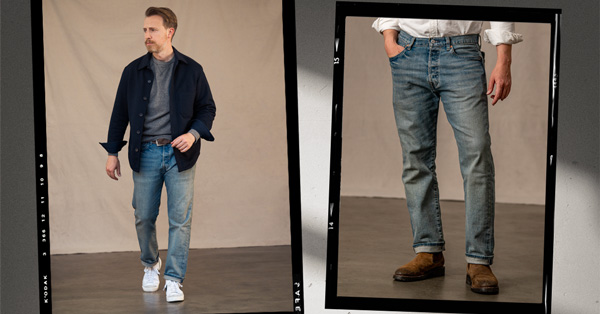
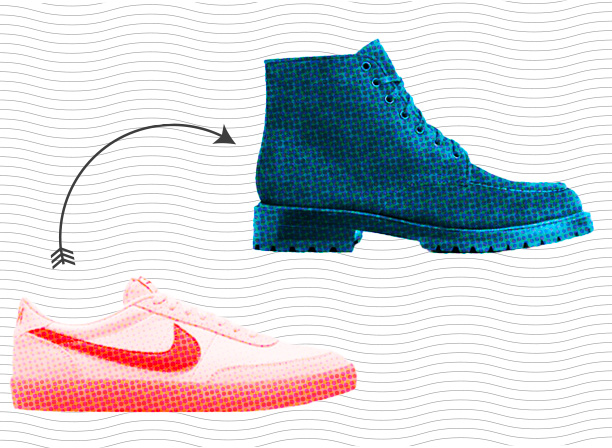
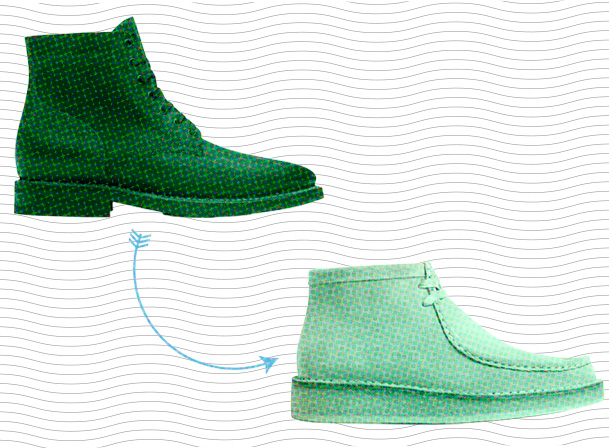
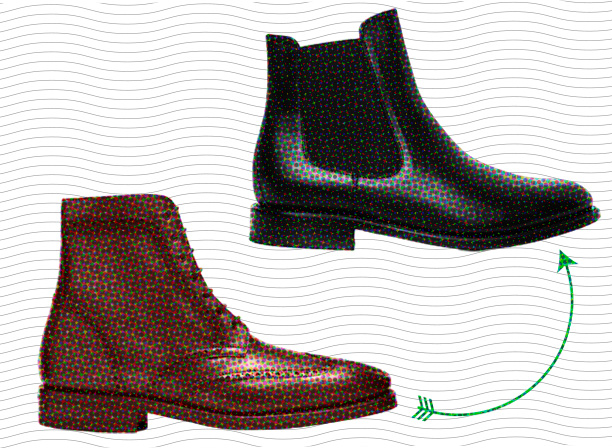
Same outfit. Only the boots changed.
As the old saying goes, people notice your footwear first, and with good reason: a different pair of boots completely changes the vibe of an otherwise identical outfit.
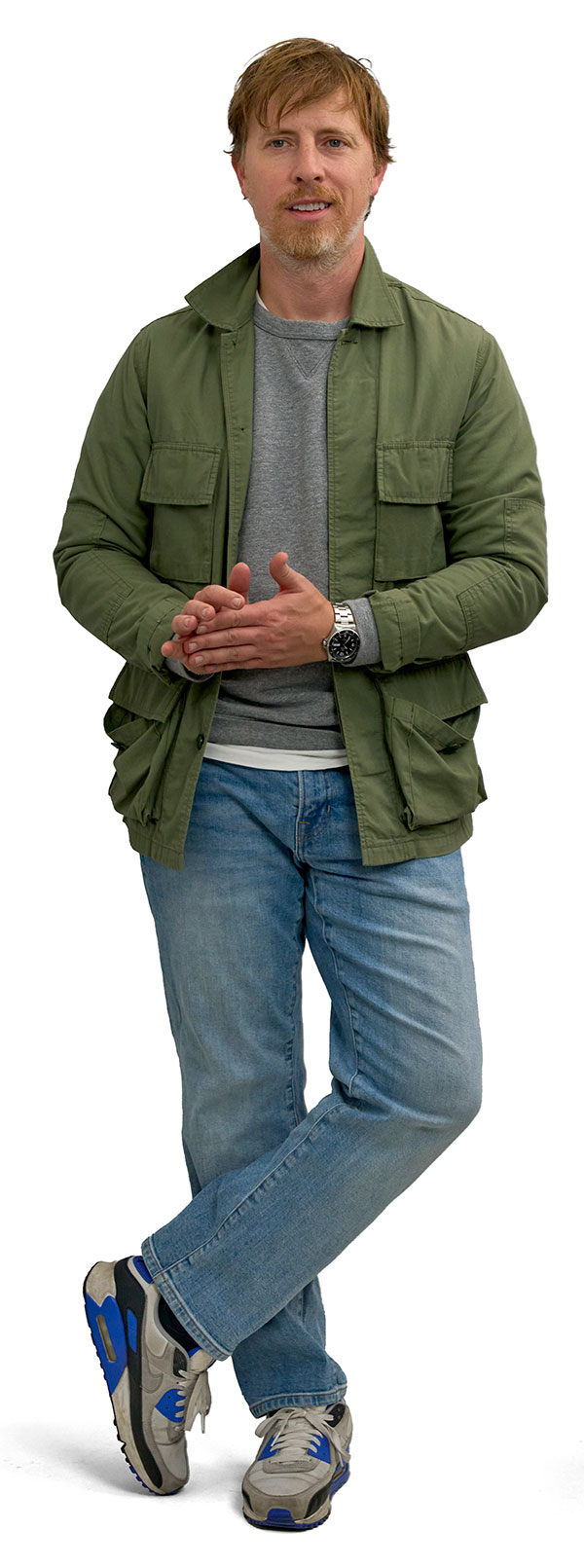
Starting Point
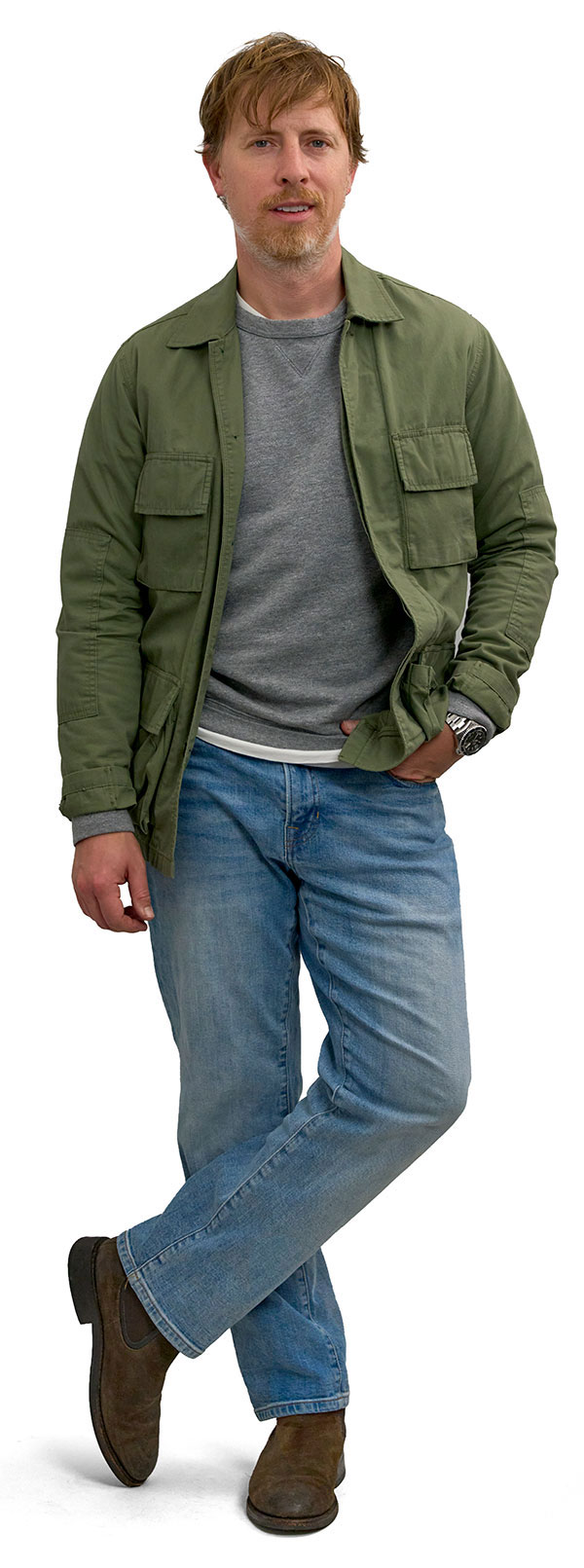
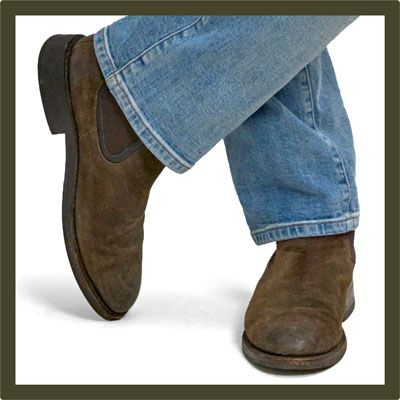
Suede Chelsea
A slimmer line under the jeans, a soft finish, and a step more put together than sneakers.
Duke, Dark Olive Suede
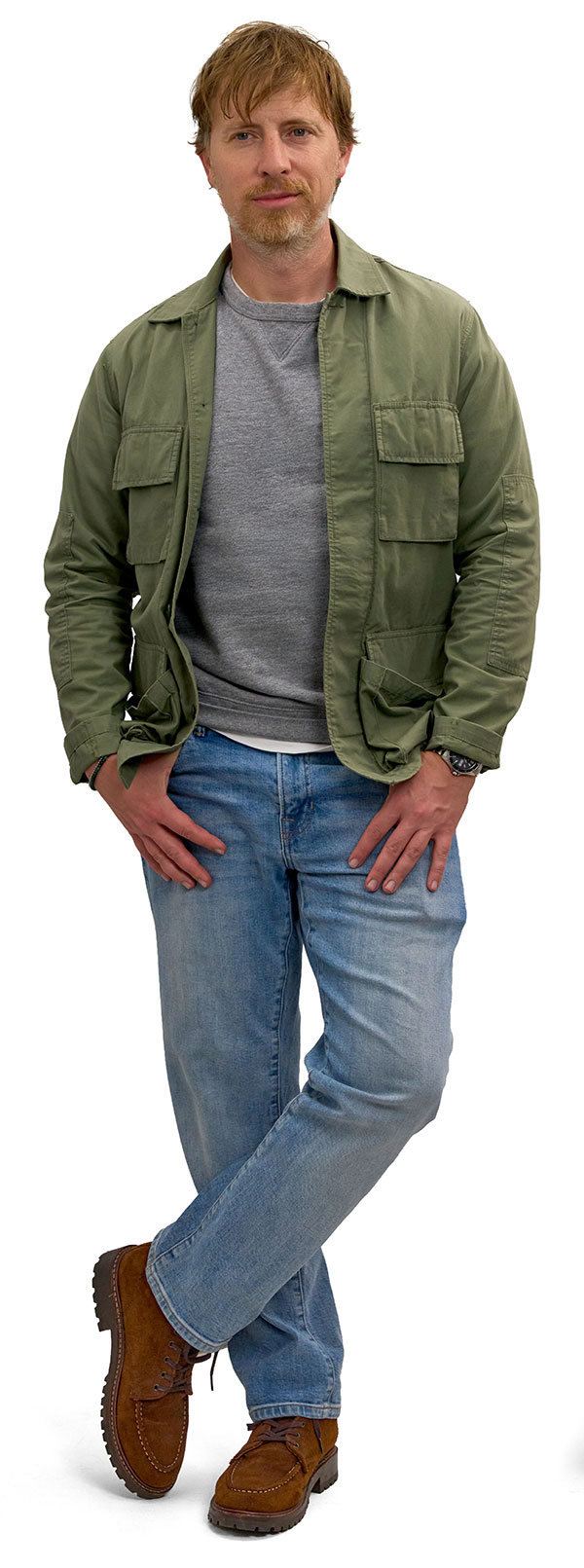
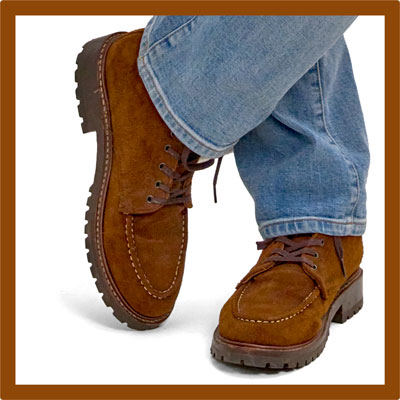
Suede Moc Toe
A warmer, bulkier foundation that adds equal parts heritage prep and outdoorsy.
Diplomat, Cinnamon Suede
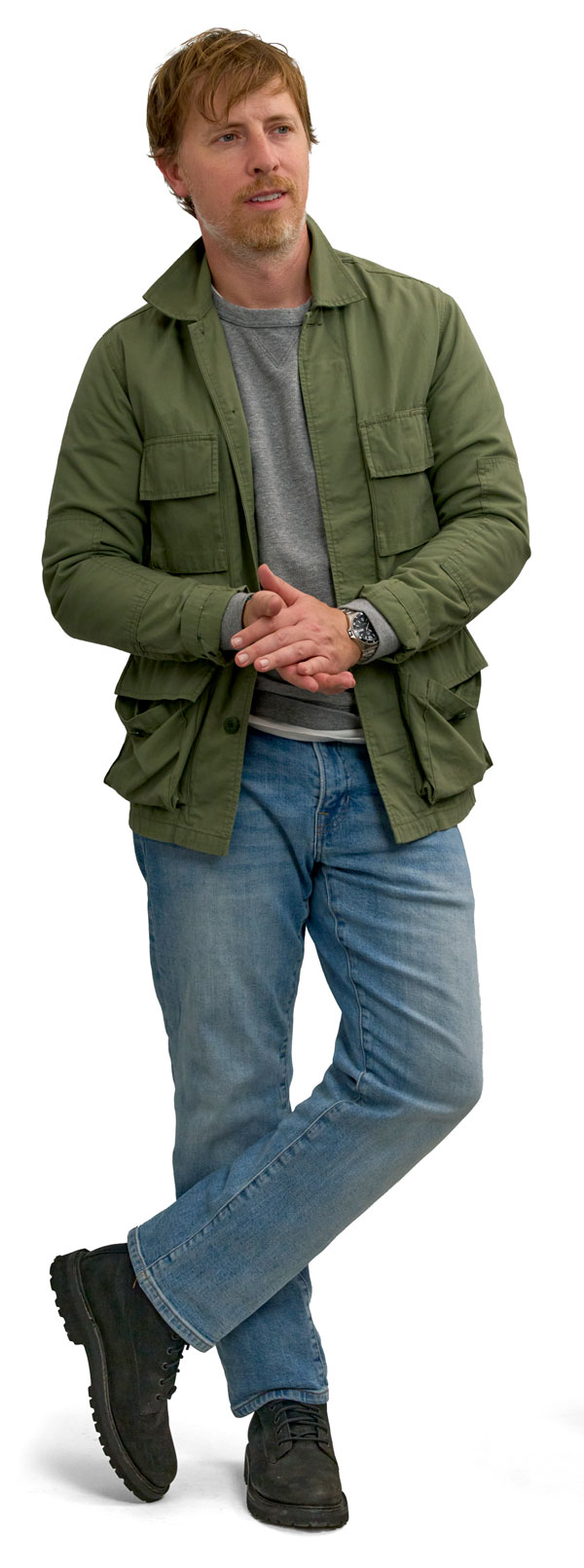
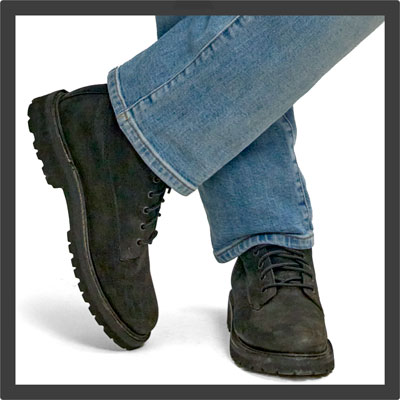
Combat Boot
A dark, chunky, rugged foundation that adds a little edge.
Explorer, Black Matte
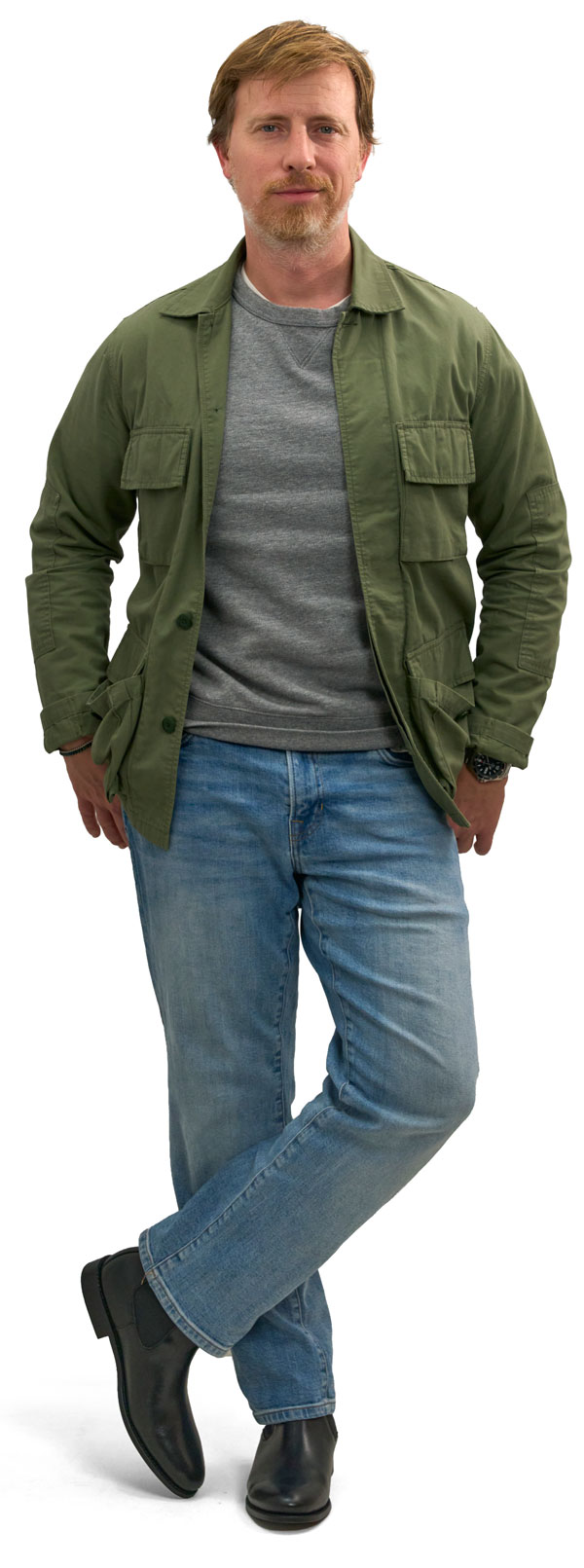
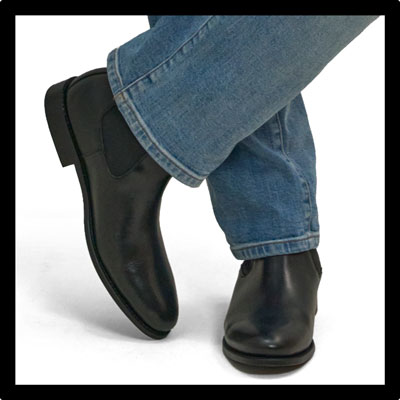
Black Chelsea
The same shape as the suede, but smooth and black, so it reads more formal.
Cavalier, Black
Pair Pressure
Decision Time
OK, So What Style to Get?
Decide on what you need the new pair to do:

Augment your style
Your week runs on sneakers and jeans, which is fine until somebody books a table with cloth napkins. Pick a boot that helps you wear your clothes in different ways to different places.
Vary your current looks
An additional boot style that's in the same wheelhouse as what you have but gives you variation so you don't feel like you're in a uniform every day.
Fill a color gap
Pick up a color to pair with your clothing that your current boots’ color doesn't match.
The Sum of Its Parts
The parts of a boot that affect its style.
Shaft height
How high the boot rides on your leg. Taller shafts read more casual.

Hardware
Eyelets or speed hooks up top. More or color-contrasting metal (hooks, straps, buckles, zippers) reads more rugged and casual.
Toe
Its shape and any detailing on it. More on that below.
Welt
The strip that joins upper to sole, often visibly stitched. Contrast stitching, like the yellow line on Dr. Martens, pushes a boot more casual.
Sole
Chunky soles push casual, slim ones push dressy, but your pant style often determines what it needs.
Leather
Suede, textured, and matte finishes lean casual; smooth leather leans dressier.
Hardware
Eyelets or speed hooks up top. More or color-contrasting metal (hooks, straps, buckles, zippers) reads more rugged and casual.
Leather
Suede, textured, and matte finishes lean casual; smooth leather leans dressier.
Shaft height
How high the boot rides on your leg. Taller shafts read more casual.
Toe
Its shape and any detailing on it. More on that below.
Sole
Chunky soles push casual, slim ones push dressy, but your pant style often determines what it needs.
Welt
The strip that joins upper to sole, often visibly stitched. Contrast stitching, like the yellow line on Dr. Martens, pushes a boot more casual.
Mixed Signals: How Dressed Up Is That Boot?
A boot is like a band: swap out one member and the whole sound changes. No one detail defines it. Here, four dials and every possible lineup, so you can see what the color, sole, leather, and closure each do to the boot, and to the outfit it's playing with.
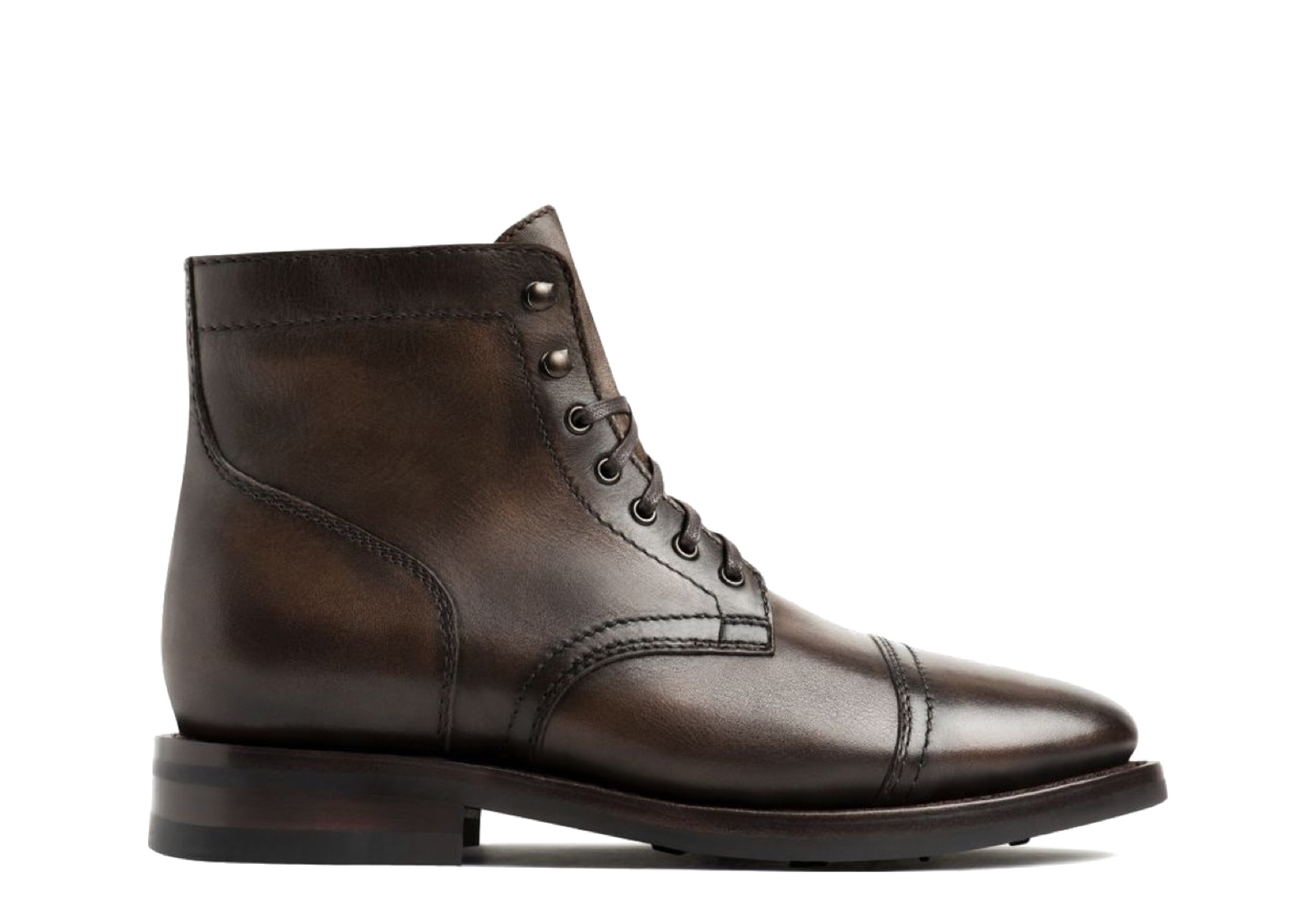
Brown lace-up, slim sole, smooth leather.
Captain, Jasper
The reading
Versatile
Golden Ratio
Pants First
Your pants determine how chunky or slim your boots are (and vice versa).
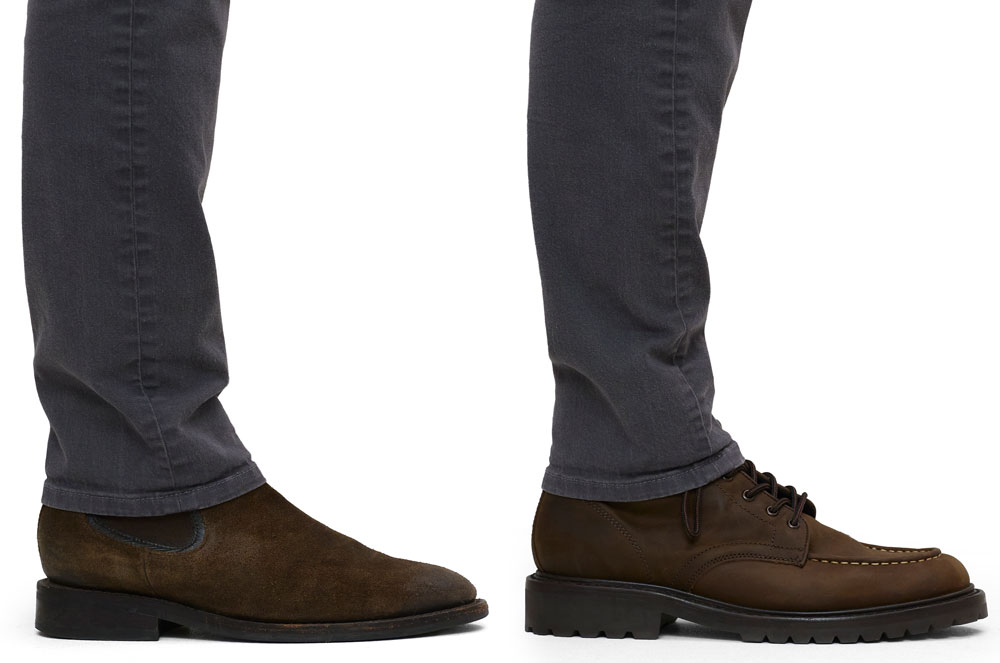
Balanced
A slim pant keeps your leg lean, and a sleek boot stays lean with it, so the look reads as one piece from knee to toe.
Bottom-heavy
Under a narrow leg, a chunky boot is the heaviest thing you're wearing. The eye drops straight to your feet, and the boot looks even bigger than it is.
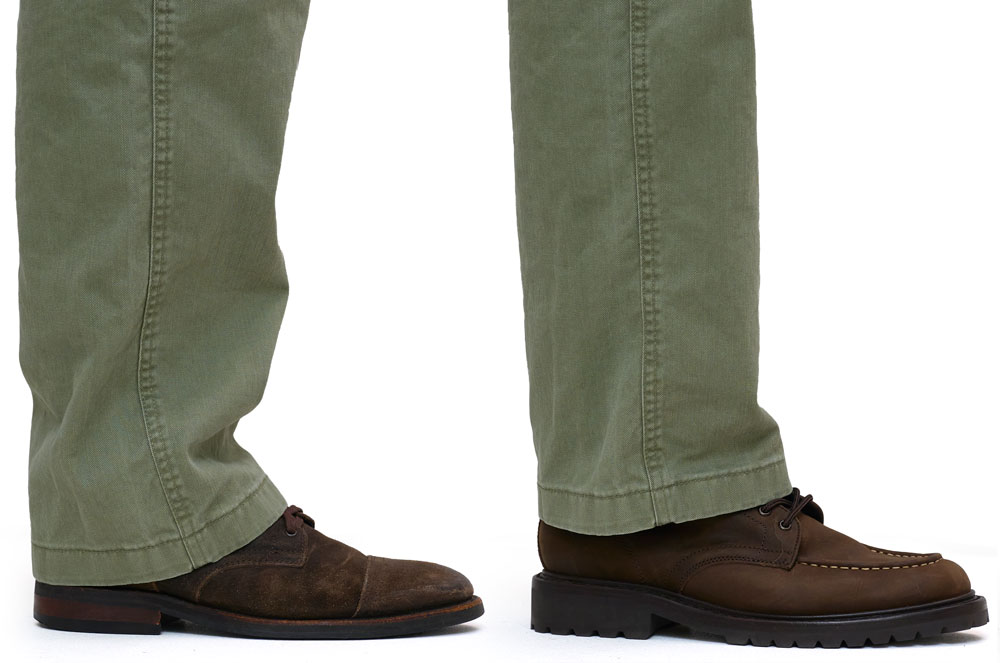
Top-heavy
With this much fabric up top, a sleek boot gets lost. The hem covers most of it, and the outfit has nothing to anchor it.
Balanced
A chunky boot has the heft to stand up to a fuller leg. Neither one overpowers the other, so the whole look feels grounded.
The Shape of Things
The common boot silhouettes to know.
Most others are derivatives or combinations of these classic shapes.
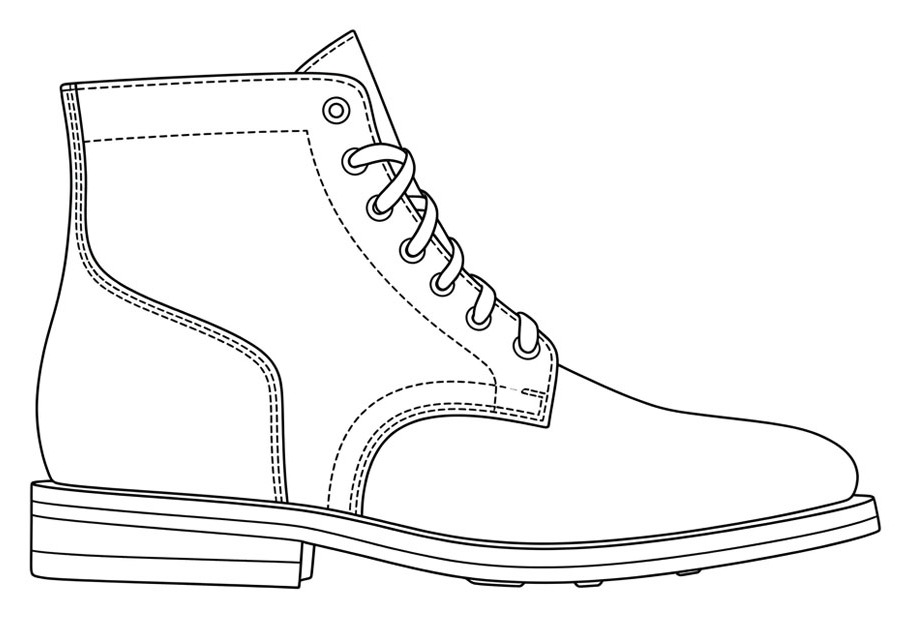
Service boot
The lace-up you picture when someone says boots. Soldiers laced into this one through both World Wars.
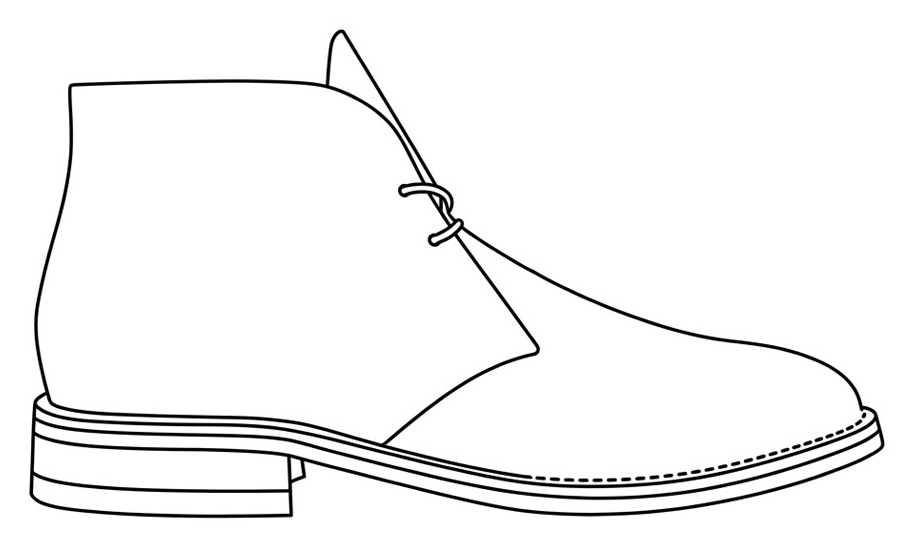
Chukka boot
Ankle-high, two or three eyelets, done. It's the easiest move over from sneakers, and it tends to be at its best with chinos and a little sun.
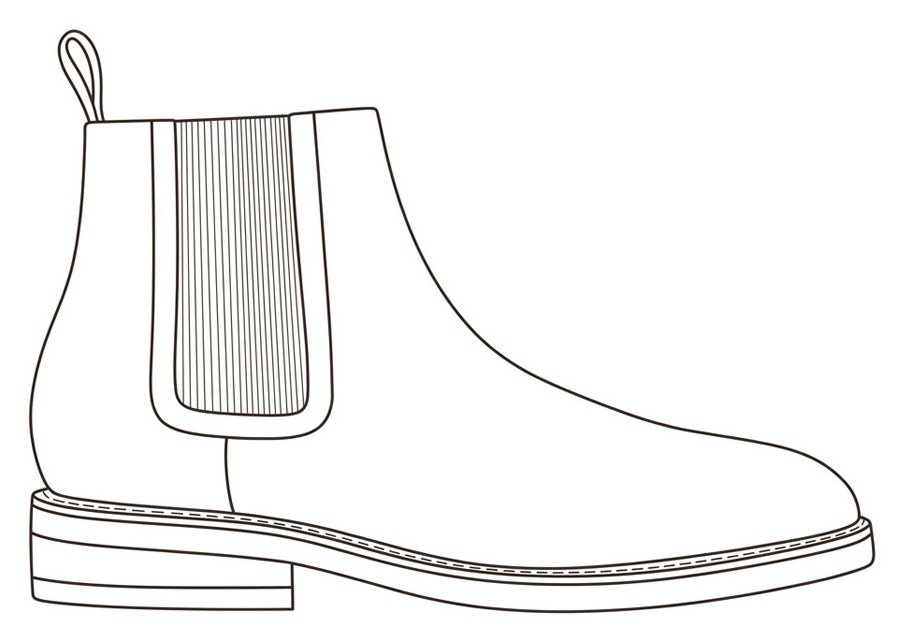
Chelsea boot
No laces, just elastic panels and a pull tab. The Victorians rode horses in them. You'll wear them to dinner, and you'll be out the door before anyone else.
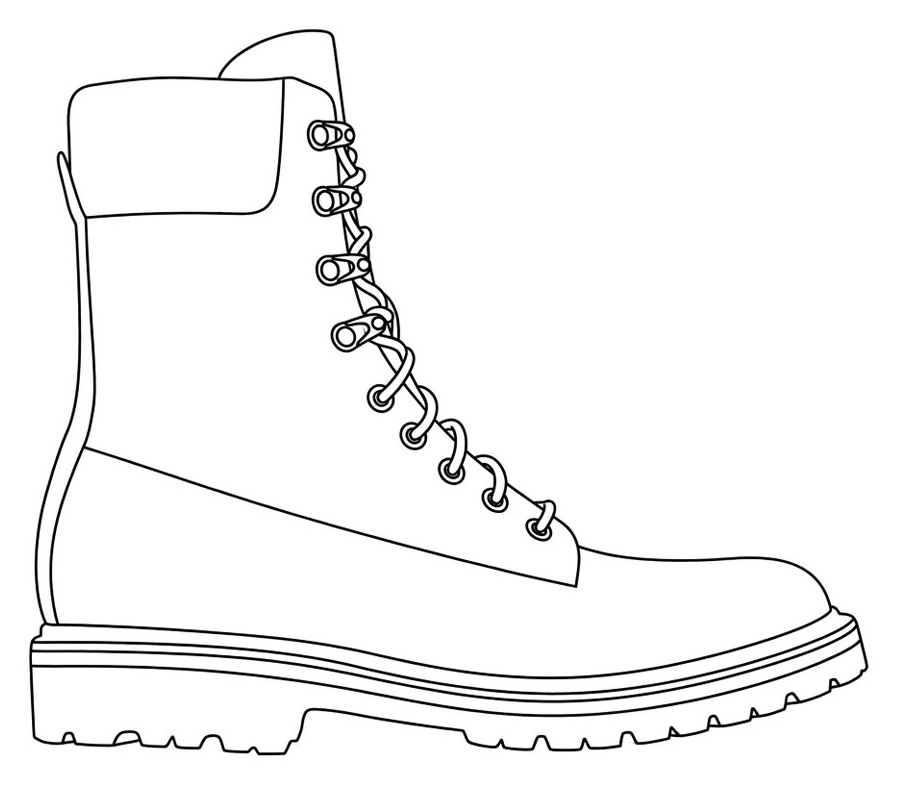
Combat boot
The black leather Army boot of the late 1950s: eight to ten inches tall, a molded lug sole added in the Vietnam years, speed hooks added in the '80s. Then punk bands and their fans took it off base.
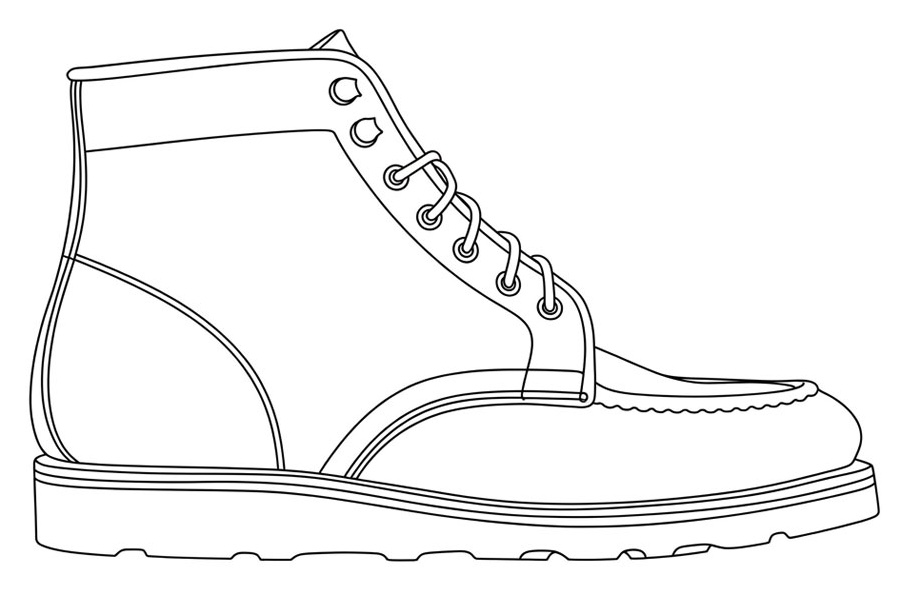
Work boot
Built for the job site, adopted by everybody else. Sturdy and roomy in the toe, it's the one for heavy denim, yard work, and anything involving a truck bed.
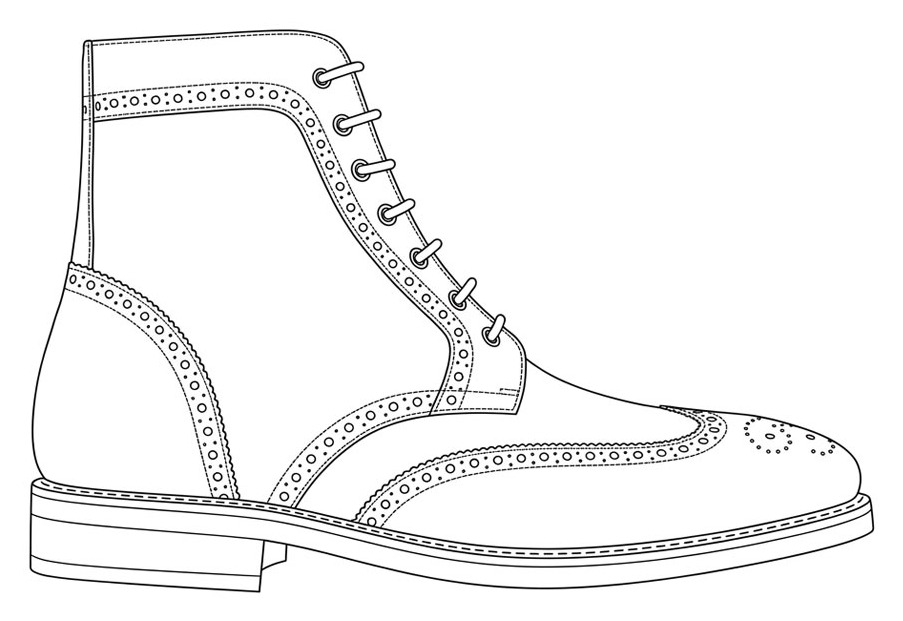
Dress boot
A dress shoe that keeps going past the ankle: trim last, slim sole, and a cap, plain, or wingtip toe. Wear it anywhere an oxford goes, in weather an oxford can't handle.
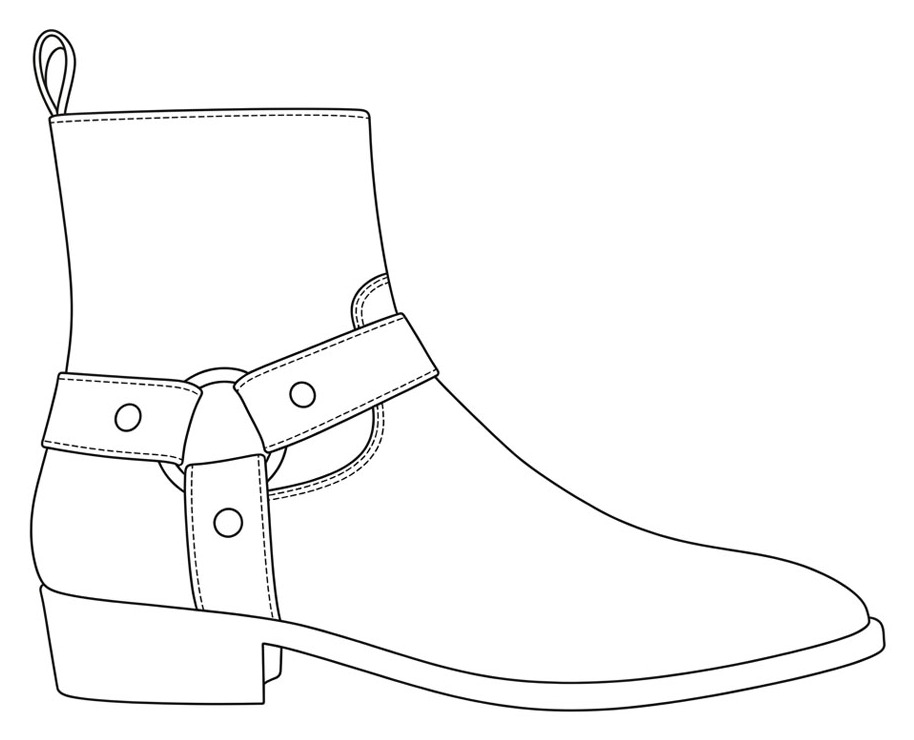
Harness
A ring and strap across the instep, borrowed from horse tack. The same hardware turns up on motorcycle and engineer boots: laceless pull-ons welders liked because they come off fast when a spark drops in.
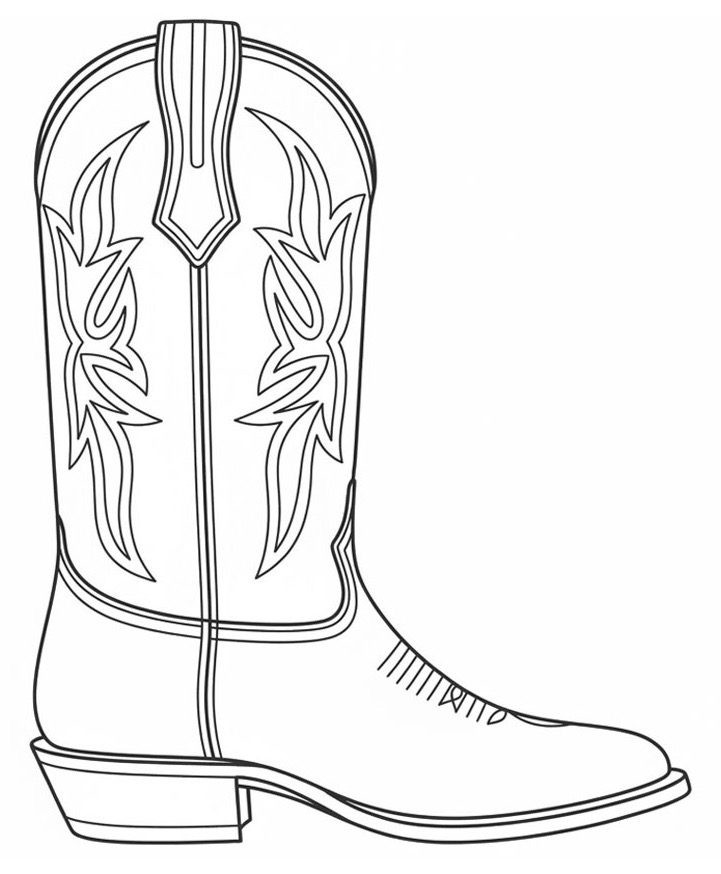
Western
Pull-on, tall in the shaft, and often stitched like it's showing off. The angled heel keeps your foot from sliding through a stirrup, and the toe comes pointed, rounded, or square.
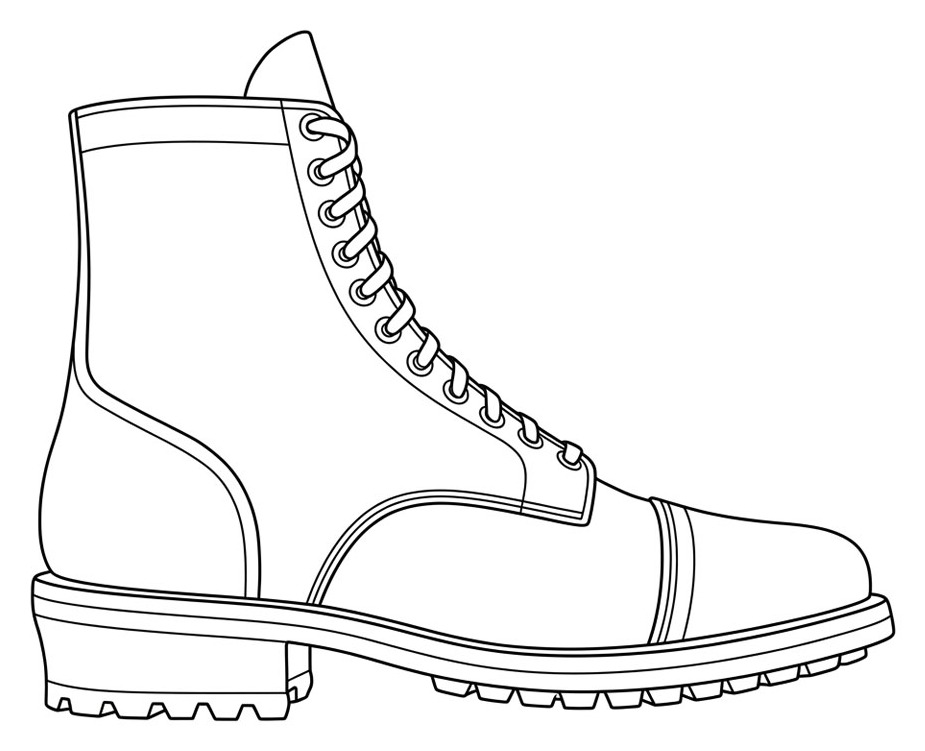
Logger
Eight inches of lace-up, a steep heel, and a lug sole built to grip a log on a hillside. Wear them with flannel and denim. Axe sold separately.
TOE THE LINE
A Few Pointers
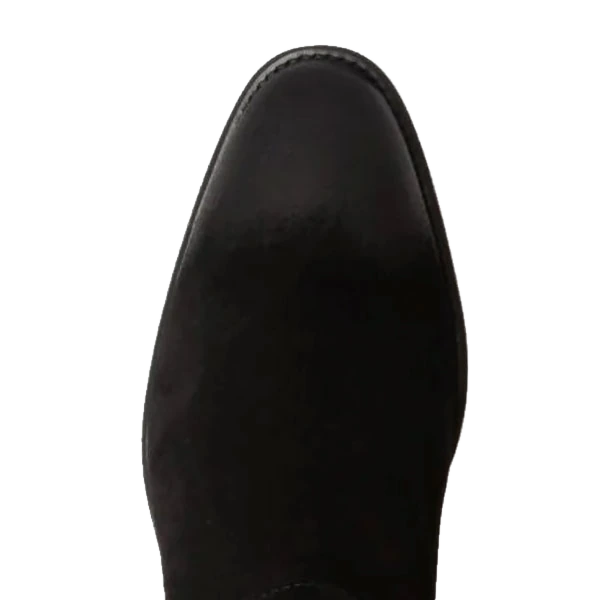
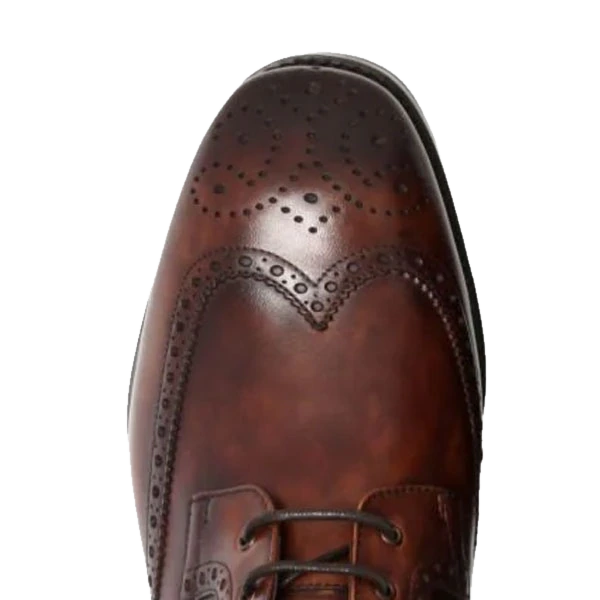
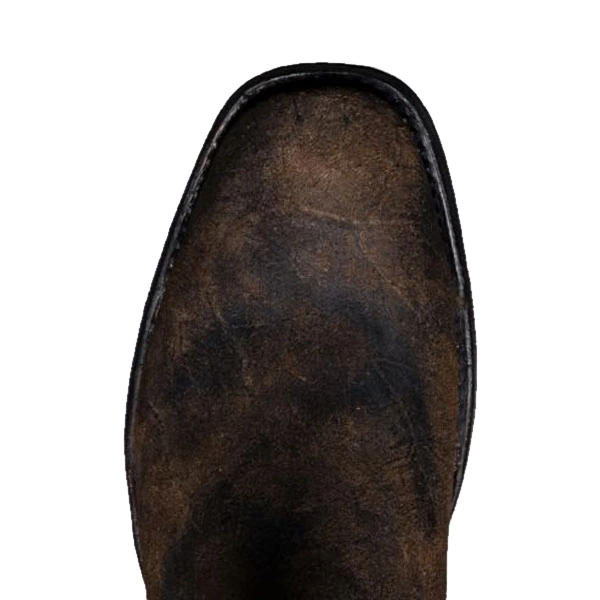
What those toe shape names mean.
The toe shows up a half step before you do, and it does most of the boot's talking.
Shape
Look straight down. The rounder the toe, the more Saturday it reads; the longer and leaner, the more it's angling for a jacket.
-

Round
President StormKing, Desert Brown
-
Almond
Harness, Black Suede
-
Chisel
Wingtip, Color #77
-
Square
Journeyman, Stone Rambler
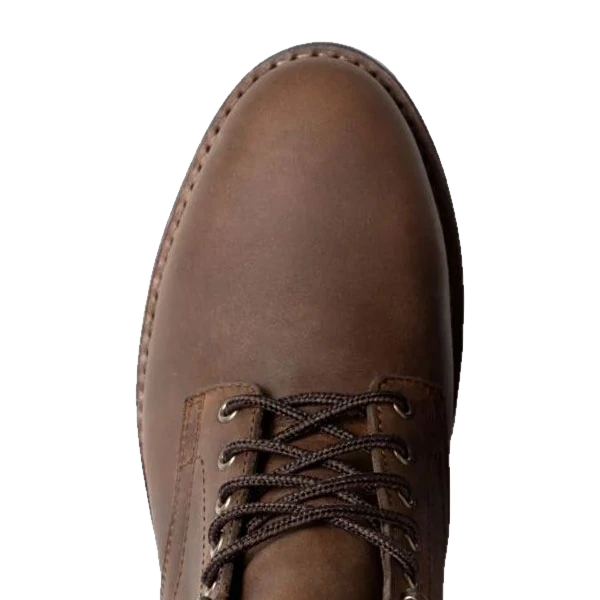
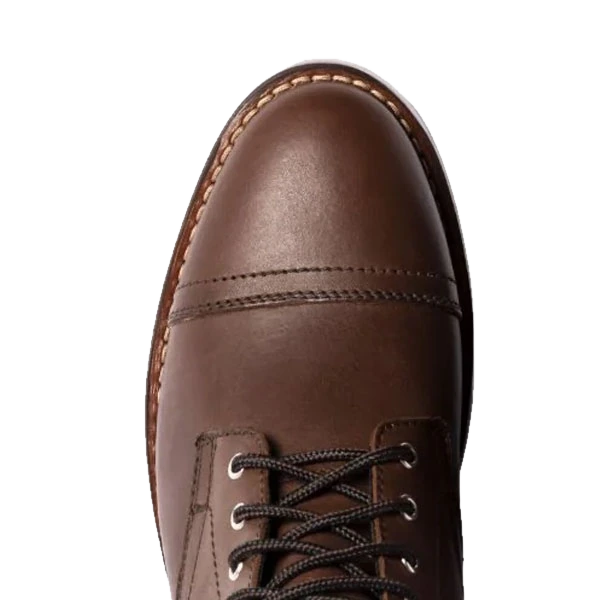
Decoration
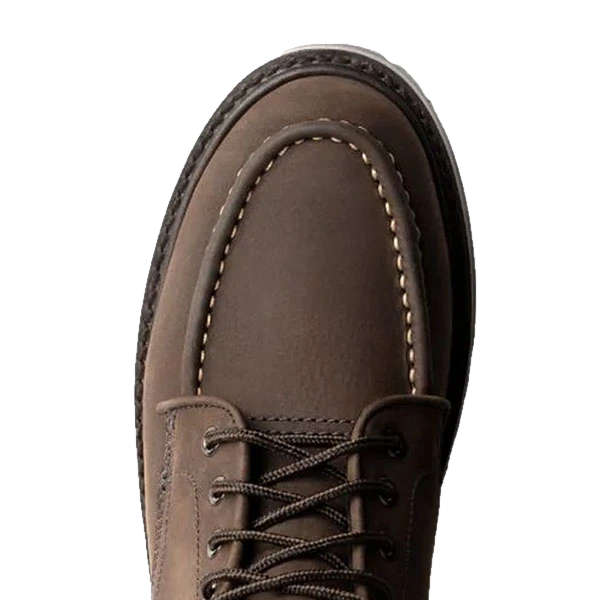
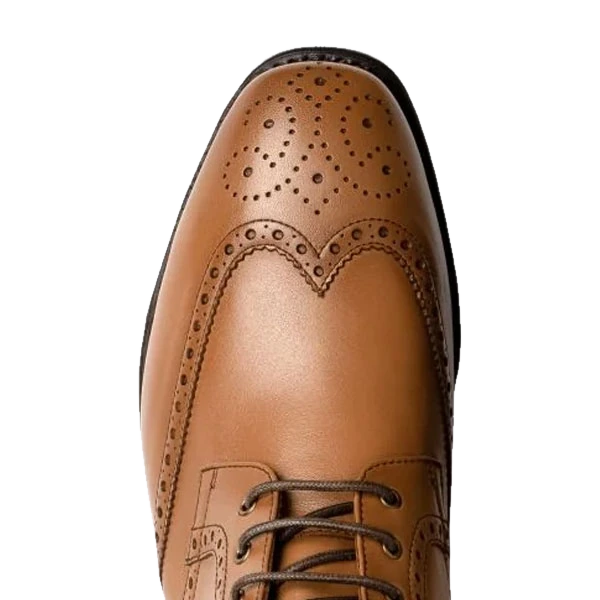
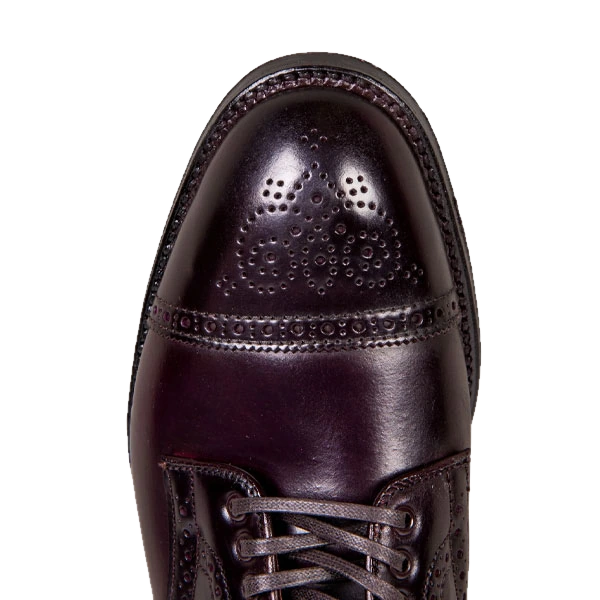
Sole Mates
The Usual Suspects
The bottom line on soles.
You've heard the names rattled off and nodded along. Here's the lineup, so next time you can pick one out.


Lug
Means: Thick rubber with deep, chunky tread, first built for mountaineering boots in 1937. The original was called the Carrarmato, Italian for “tank tread,” and it looks it.
Good for: Snow, mud, wet leaves, and any outfit that could use some heft at ground level.
Studded
Means: Smooth rubber set with round studs. Dainite, an English brand, introduced it in 1910. Other makers copied the design, and the name often gets used for all of them.
Good for: Rainy commutes in boots you'd also wear to dinner. The studs grip without tracking much dirt.
Crepe
Means: Natural rubber, tapped from trees as latex and dried in crinkled sheets. Also called plantation rubber. Soft underfoot.
Good for: Long, dry days on your feet. It's the classic partner for a desert boot, and it darkens as it gets dirty, which is half the charm.
Leather
Means: The original. Hard, smooth, and slim at the edge, with a click on hardwood no rubber can match.
Good for: Dry forecasts, office floors, weddings. It breathes better than rubber and grips less in the rain, so check the weather.
Wedge
Means: One flat slab of rubber running heel to toe, with no separate heel.
Good for: Sneaker guys buying a first pair. It's the closest thing to a sneaker sole, and it's been a work boot staple for decades.
Fix Fit
Stiff, Not Sadistic
The Lowdown on Break-In & Fit
Boots can be the most comfortable go-to you have. If you've spent the last decade in sneakers, I know how that sounds. Stay with me. The pair that fits is the one you reach for before the coffee's done, and the only pair that gets worn.

Before You Order
TRY A HALF SIZE SMALLER FIRST. The same number usually fits about a half size bigger in a boot than in a sneaker. It's a starting point, so check the brand's size guide: work boots, insulated boots, and a few makers run true to size.
THE BOX ONLY KNOWS LENGTH. Width, the room over the top of your foot, and toe box depth come from the last, the form the boot is built on. Wide foot? A wider fit (E, EE) may be the answer. Sizing up just buys length you didn't need: rubbing and that goofy clown-shoe look.
The Try-On
Boots shouldn't be uncomfortable when you try them on. Five checks before you decide to keep them.
BOTH FEET. My right foot runs up to a half size bigger than my left, even though my toes seem to line up. Don't assume one foot fitting means they'll both be comfortable.
REAL SOCKS. Wear the socks you'll actually wear, plus any insoles or orthotics you use.
TOE ROOM, THREE WAYS. Your toes want room up, forward, and side to side. If it pinches or there's pressure, don't assume it will stretch out.
FIND THE BEND. The ball of your foot should sit where the boot is widest and where it bends.
WALK A LAP. Get up and move. A little heel slip is fine; lacing, socks, or break-in can handle it. If they rub enough to hurt now, those puppies don't fit.
At the try-on, stiff is allowed. Pain is a dealbreaker.
WEAR WILL CHANGE
- The leather softens and loosens slightly
- The upper shapes itself to your foot, creasing where it bends
- The insole and cork underneath press into your footprint
WEAR WON'T FIX
- Too tight across the width
- Pressure on the top or front of your toes
- A heel that rubs painfully right away
- A shape that doesn't match your foot (no amount of pavement pounding will talk it out of that)
Exhibit B